Gear Architect and Pursuit Strategist: the numbers my coach keeps in his head
My coach knows what lap time a pursuit needs. I don't. So I built two tools that put the numbers on the screen, so we could finally talk about the plan.
Written by koli440, who builds Velocity Stack
· 2 min read
- story
- gear-architect
- pursuit-strategist
- track-cycling
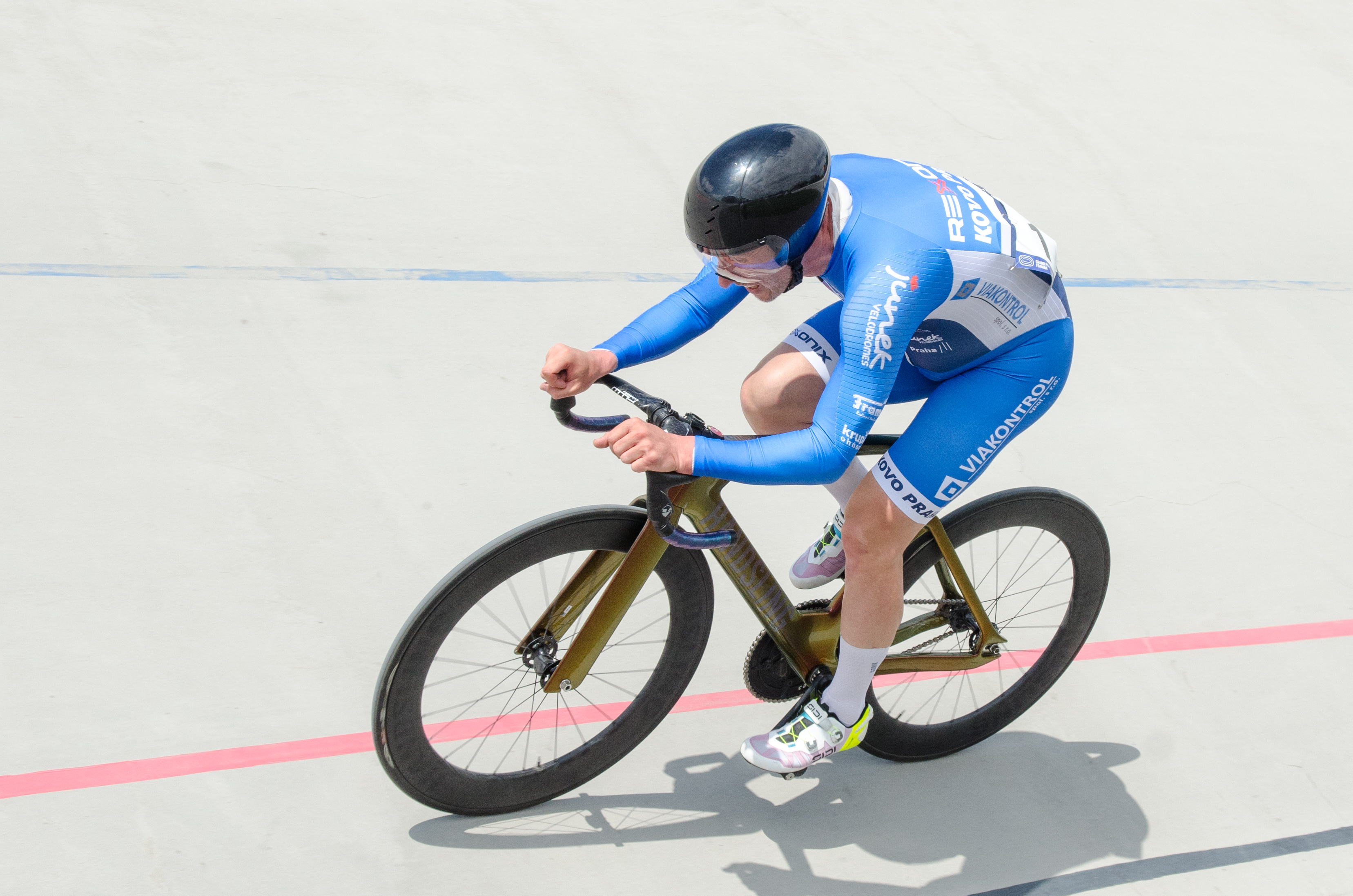
My coach knows how fast a lap has to be in a pursuit. It's all in his head, and he's been doing it for years. I haven't got that ability, and I don't think I ever will.
What I needed was a place to put in my target time, my pacing and my gear, and play with all of it. Everything interactive, so I could try things out and then sit down with my coach with something real to talk about.
The moment it clicked#
The first time I used it, something simple happened. I knew what a 17-second lap meant. And I could instantly see that on the gear I wanted to ride, a 17-second lap meant this cadence.
A lap time stopped being a number on a stopwatch. It became a cadence I could feel in my legs. That conversation with my coach was a better conversation than any I'd had before.
Two tools, one picture#
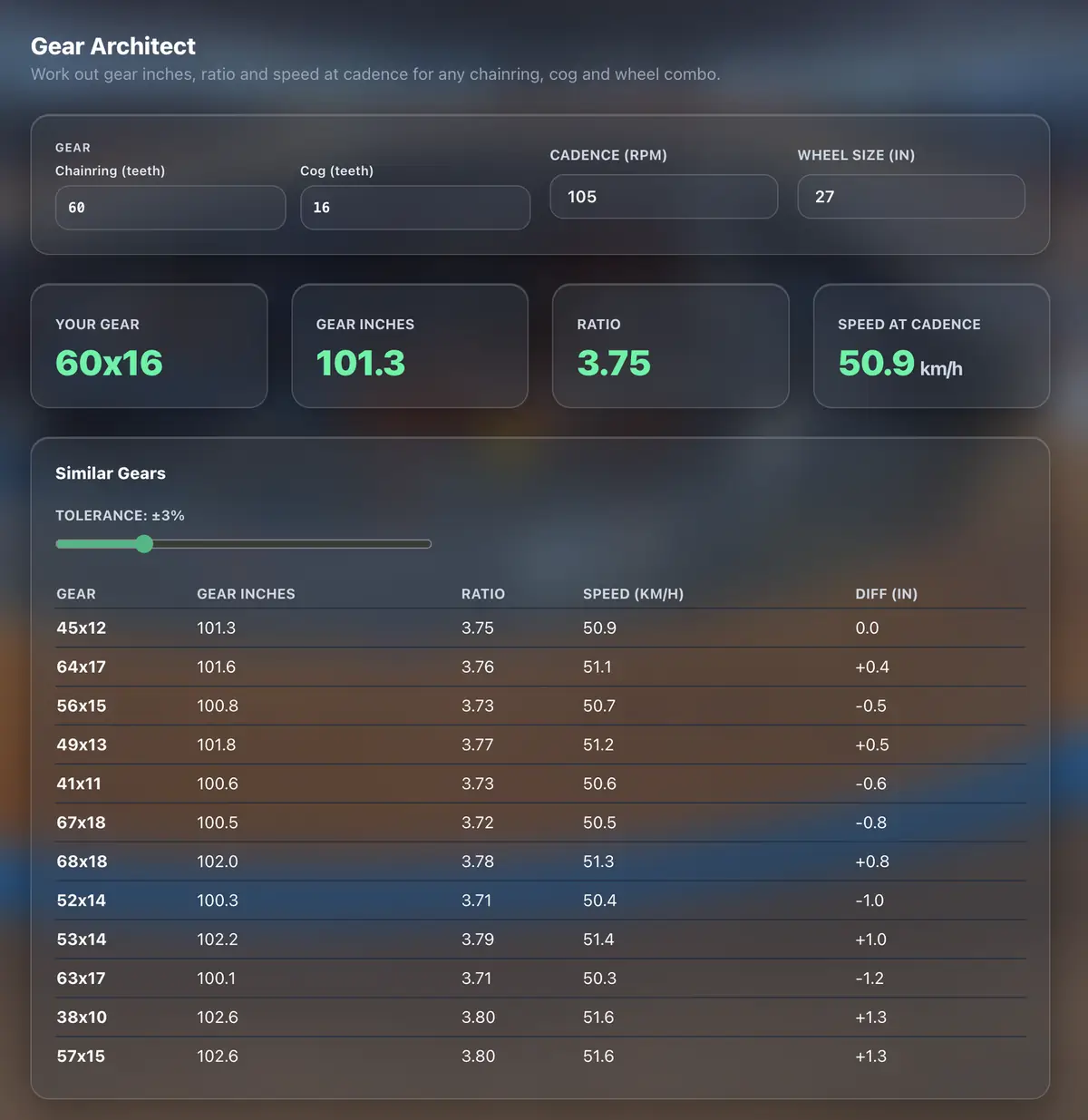
Gear Architect is for choosing gearing, whether for training or a race. You compare options and see gear inches, ratio and the speed you get at a given cadence.
Pursuit Strategist is for planning the ride. You pick the track and the discipline and enter a target time. It works out lap by lap what you need to ride. It includes the standing start, which is how much energy the first lap really costs, and it shows the pace dropping or holding across the rest. It shows the cadence and speed each lap means on your gear.
The two belong together. The hard part isn't the maths. It's that, as an athlete, you rarely see all of it in one place. Putting every input together, so I could see gear, pace and lap times together, is what I actually built.
It's a guide, not a script#
I can't ride the exact numbers, of course. Nobody does. But the plan is still valuable for pacing during the effort.
When you have to remember the lap times you wanted, it gets confusing fast. When it's written down, you can compare what you rode with what you planned. That sounds easy. It's much harder to do than to say, especially without an experienced coach who carries all this in his head.
What comes next#
I've noticed there's a pattern in most of my efforts, and it's not a straight line. I go out fast for about three laps, slow down until around lap six or seven, and then bounce back and speed up again.
My historic data already contains that curve. So the next step is to model pacing on an athlete's own curve instead of a generic one. I think that will make the plan a lot more honest.
Try it#
Both tools work without an account. Open Gear Architect or Pursuit Strategist, put in a target time and a gear, and see what a lap really means.
If you log in with a free account, that's when it gets better. Only then can I connect all your data and the tools together: your gears, your tracks, your records and your rides.
I'd love to hear what you'd want from them, especially if you're a coach.
Related posts
- Why I built Velocity Stack (it started with a spreadsheet) · 6 November 2026